
Long arm of the law reaches out and Phil gets his collar felt

Freemasons link with Boston Sea Cadets to provide veteran breakfasts
June 29, 2026
A take of two Keiths at Tower Chapter Rose Croix…
June 30, 2026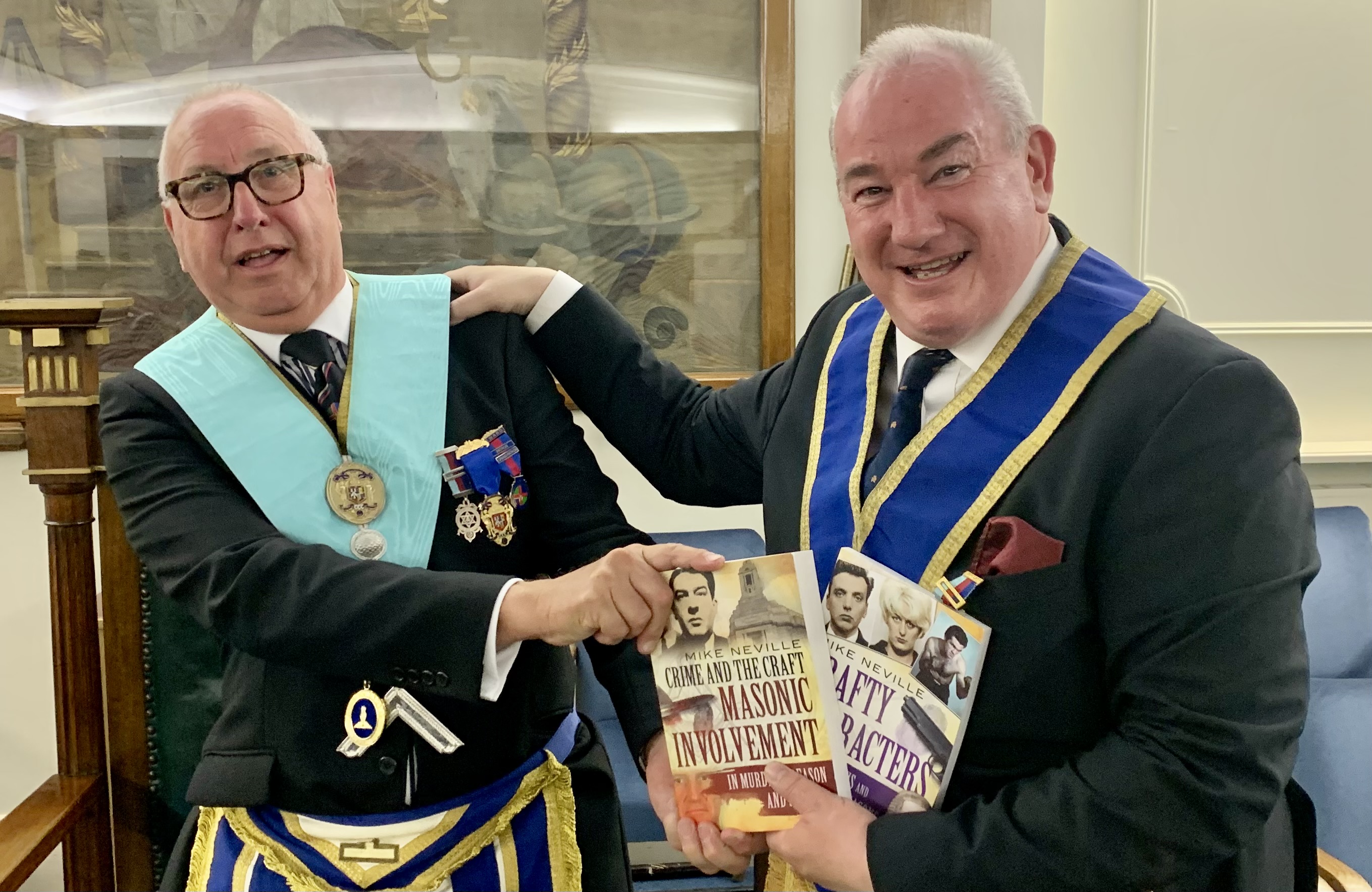
Watch any TV crime drama and chances are that the crime will be solved thanks to a Freemason. That’s because from a fingerprint to a photofit by way of a bloodstain, so much forensic science was developed by Freemasons who were also policemen, according to Freemason and retired Detective Chief Inspector Mike Neville.
He was a guest of the Lincolnshire Bicentenary Lodge of Installed Masters, where he told an audience of almost 90 about the unbroken thread linking the craft to crime and detection through more than 100 years, leading to things even those not involved with the law take for granted. Discovering that PGM Dave Wheeler had been in uniform during his time in the Police force rather than being a detective, he said: “You’ll learn something tonight.”
Mike, author of books about the part played by Freemasonry in crime and detection, and a regular guests on GB news, was able to explain how Freemasons had been instrumental in developing the crime solving potential of fingerprints, DNA recognition, ballistics, offender profiling, and security of crime scenes, and pattern recognition.
Rolling back through time Mike told of the consequences of the first murder on a train which led to the introduction of the ‘communication cord’ to alert staff to an emergency on the train. The killer in that first murder was arrested in New York, after a transatlantic chase with the police overtaking the murderer’s vessel en route. A similar case happened after the invention of the telegraph, when the British police were able to cable ahead to get the co-operation of the Americans to catch another murderer when he landed in New York. “That co-operation exists even today,” said Mike. “The British police have an officer in the New York Police department, and they have one in the UK.”
The story of Operation Mincemeat, first a real-life piece of wartime espionage, then two films, and now a stage musical, was developed by Freemason Sir Bernard Spilsbury, said to be the father of British forensic pathology. He devised the plan to trick the Axis powers about the location of the Allied invasion of Sicily by planting a corpse carrying fake top-secret documents off the coast of Spain to mislead German command. It worked, and is said to have saved thousands of lives – but not his own. Spilsbury took his own life in December 1947, having lost his two sons during the war.
Spilsbury had earlier helped to convict ‘Brides in the Bath’ murderer George Smith. It was highly significant in the history of forensic pathology, standing as one of the first successful prosecutions to use striking similarities between connected crimes to prove deliberation.
Great Train Robber Ronnie Biggs was identified in Rio by his fingerprints, the science of which had been developed by Sir Francis Dalton in 1892. Another Detective and Freemason – Brian Marshall – believed he had met Biggs in Brazil. He was able to get a teacup used by Biggs and send it to London, where fingerprints proved it was in fact the Great Train Robber.
And so to Jack the Ripper, where offender profiling might have found the criminal. Mike dismissed the notion that the killer was a member of the Royal family, looking at the Ripper’s profiling, which he said was uncannyily similar to that of Pete Sutcliffe, the Yorkshire Ripper…
Mike had been invited to talk at the Lodge by current Master Phil Spicksley when the pair had met by chance at a Mark Master Masons event in Benidorm. Phil said: “I would like to thank everyone who attended the meeting in Grantham. It was a marvellous occasion to support the Lodge and to show commitment by our members to the future success of the Lodge.”
A raffle at the end of the evening raised £570 which the Lodge rounded up to £600, giving £300 each to the Shropshire Army Cadet Force, where Mike is the Commandant, and the Lincolnshire Army Cadet Band.
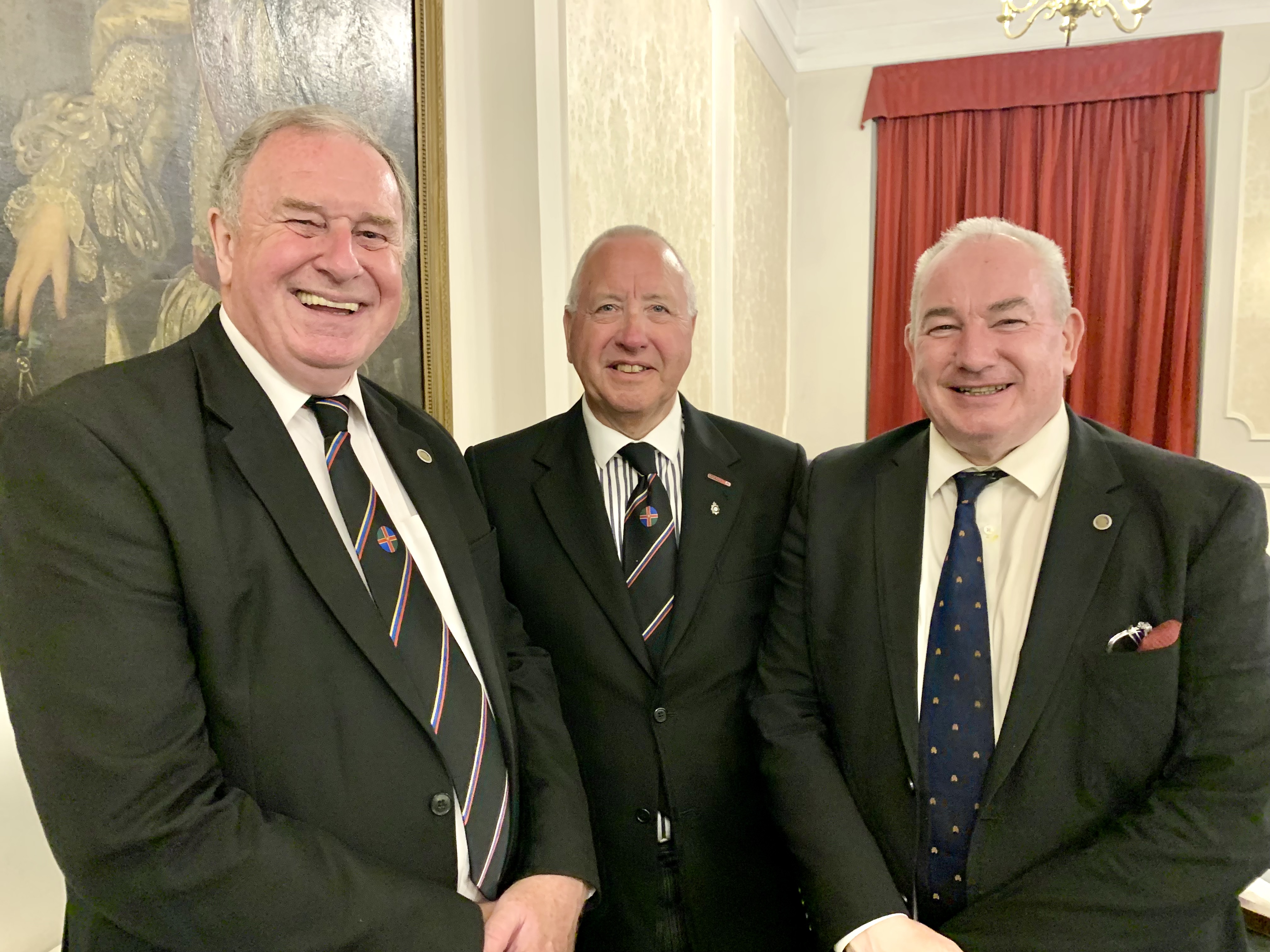
Phil Spicksley flanked by Dave Wheeler, left, and Mike Neville. Mike’s wearing a Lincolnshire lapel pin ‘fitted’ for him by Simon Butler.